
Neurofeedback and Sport Performance: What a Recent Meta-Analysis Found

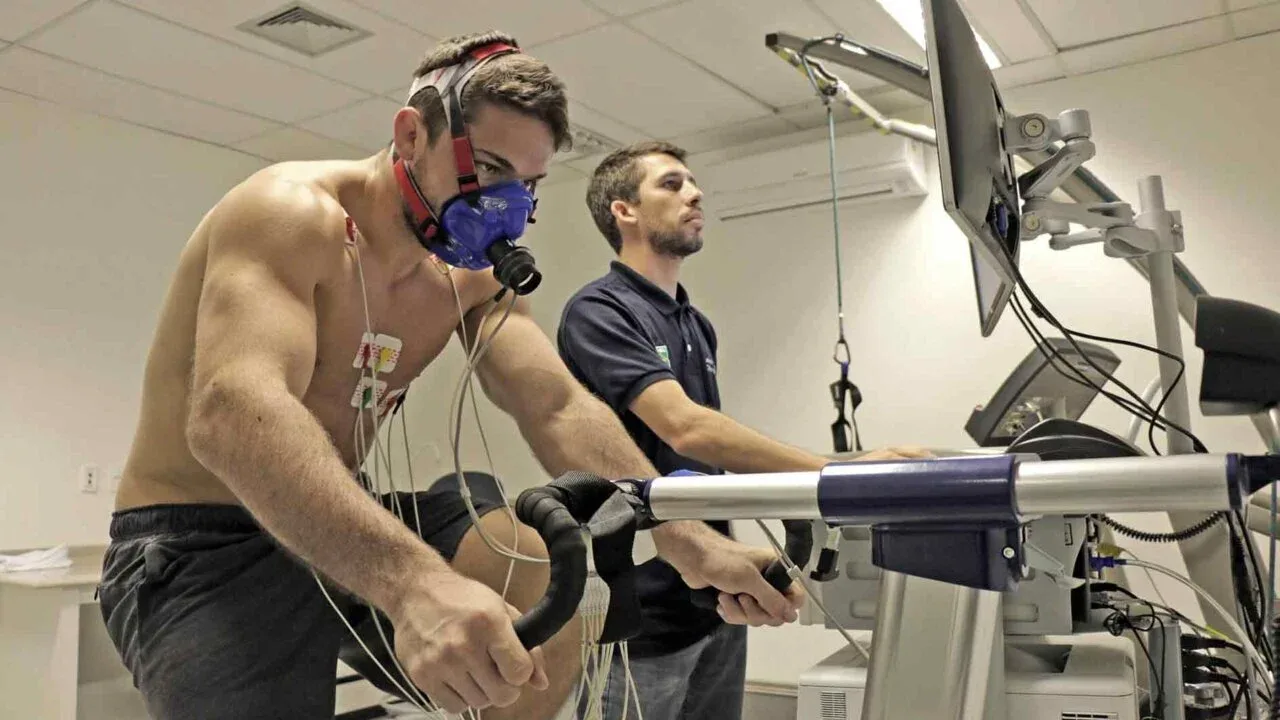
A meta-analysis was recently published on neurofeedback for sport performance, and it showed encouraging results. A meta-analysis is a research study that reviews and summarizes the results of other studies. Meta-analyses give a good picture of the field as a whole and are usually considered higher-quality evidence than individual studies.
Understanding how neurofeedback helps people perform in high-stakes fields carries over to understanding how neurofeedback helps people improve mental health symptoms. Here are three takeaways from the meta-analysis in plain English.
1) Physical performance improved across a range of sports
The sports included golf, darts, archery, dance and soccer, among others. "Physical performance" was defined as objective, observable muscular outputs such as reaction time, precision and body balance. Across the 21 studies in the meta-analysis (271 healthy adults), the average effect of neurofeedback on sport motor tasks was a Hedges's g of 0.78. That is equivalent to lining up 100 people from worst to best at a sport and moving from number 50 to number 78, without directly training the sport.
2) Novices improved more than experts
There was variability in how much a given individual responded to neurofeedback, and novices improved more than experts. This is equivalent to patients improving more when they have more symptoms: a bigger deficit means a bigger runway for improvement.
3) The gains likely came from more than motor learning
In addition to improvements in motor learning and application, the results likely came from improvements in attention and presence, relaxation, and a sense of 'effortlessness.' These translate very clearly into how neurofeedback improves mental health.
Taken overall, these results matter not just for sport performance, but as a complementary data point that neurofeedback improves how people feel, work and perform.
References
Yu, C.-L., Cheng, M.-Y., An, X., Chueh, T.-Y., Wu, J.-H., Wang, K.-P., & Hung, T.-M. (2025). The effect of EEG neurofeedback training on sport performance: A systematic review and meta-analysis. Scandinavian Journal of Medicine & Science in Sports, 35(5), e70055. https://doi.org/10.1111/sms.70055