Calm mornings, better focus, fewer fights. It starts in the brain. ADHD treatment in Hamilton & Burlington
Meltdowns, unfinished homework and big emotions aren't bad parenting, and they aren't your child's fault. Often, they're brain patterns. Neurofeedback retrains those patterns, which can mean a calmer, more focused son or daughter.
- Drug-free and non-invasive, for ages 4 plus
- Safe and research-supported
- Built for lasting change, not lifelong sessions
Free 30‑minute call · No waitlist · Covered by most benefits plans

ADHD turning every day into a battle?
- Do mornings end in a meltdown before anyone is out the door?
- Are you getting calls from the school about behaviour again?
- Is homework, bedtime or screen time a fight every night?
- Is nobody in the house sleeping well?
- Do you lie awake wondering, "Is this something I did?"
From dawn until bedtime
It can start before breakfast: a meltdown over shoes or teeth, and you're late before the day has even begun. Schooldays are their own battle. Teachers may read your child as lazy or defiant when they're trying their hardest. You may worry they're falling behind or being left out by other kids. At home, the stress spreads: siblings feel it, partners disagree about what to do, and by evening everyone's running on empty.
Then bedtime turns into another fight. Your child can't settle or wakes in the night, and you lie awake knowing a tired kid means a hard morning. The next day, the cycle starts again.
Maybe you're looking for ADHD treatment without medication, or something to add on top of it. Maybe you've been waiting months for an assessment or support. Maybe your patience is running thin, and you regret how much you're yelling. Maybe you feel guilty, knowing that your kid is the one who's really struggling.
Even loving, patient parents eventually think: "I can't keep doing this."
You love your child. But you're also worn out. What you want is a calmer home, and to know your child is going to be okay. With the right support for their brain, that can happen.

You're not alone, and it's no one's fault
ADHD is more common than you think: 8.6% of children and youth in Canada have a diagnosis 1. That's nearly twice as common as autism, peanut allergies, epilepsy and diabetes combined 2–5.
More important, ADHD is stressful to manage. Parents of children with ADHD report more stress than other parents, and the more severe the ADHD, the higher the stress 6. In one study, parents described their child’s behaviour as a “wrecking ball,” home life as a “war,” and parenting as relentless and exhausting 7. And sleep is often part of it: in one study, 73% of school-age children with ADHD had sleep problems, and those children were more likely to be late for school while their parents were late for work 8.
But ADHD is not bad parenting or your child's fault. Often, it’s brain wiring.
Children with ADHD have differences in the brain systems that manage attention, impulses and emotions. That's why getting out the door, stopping a screen or waiting a turn can be so hard. It's not a choice or a character flaw: these are skills that the ADHD brain finds harder to learn. Your child didn’t choose an ADHD brain, and you didn’t cause it.
Luckily, ADHD brains can learn new patterns, and behaviour can change. That’s what neurofeedback for ADHD is designed to do.
ADHD treatment that trains focus and self-control at the source
Our Neurofeedback Program can help. Each one-hour session combines three safe, drug-free, research-supported tools. Together, they train the brain and nervous system to self-regulate, so your child can focus, relax and handle big emotions more easily.
NeurOptimal® neurofeedback
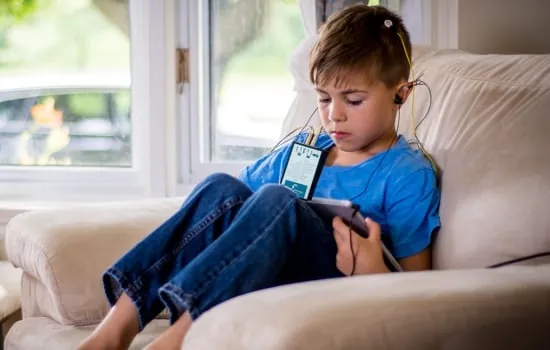
Neurofeedback is the core of our ADHD treatment. Your child watches a show while sensors listen to their brain. When their brain activity shifts suddenly, the show pauses for a split second. That pause is feedback: it lets the brain notice what it's doing and correct unhelpful activity. Over time, this helps many children calm down, focus and handle big emotions more easily. Neurofeedback for ADHD has been studied and safely used for over 30 years. A 2025 review of 17 randomized trials found it can improve impulse control and thinking skills 9.
More about neurofeedback →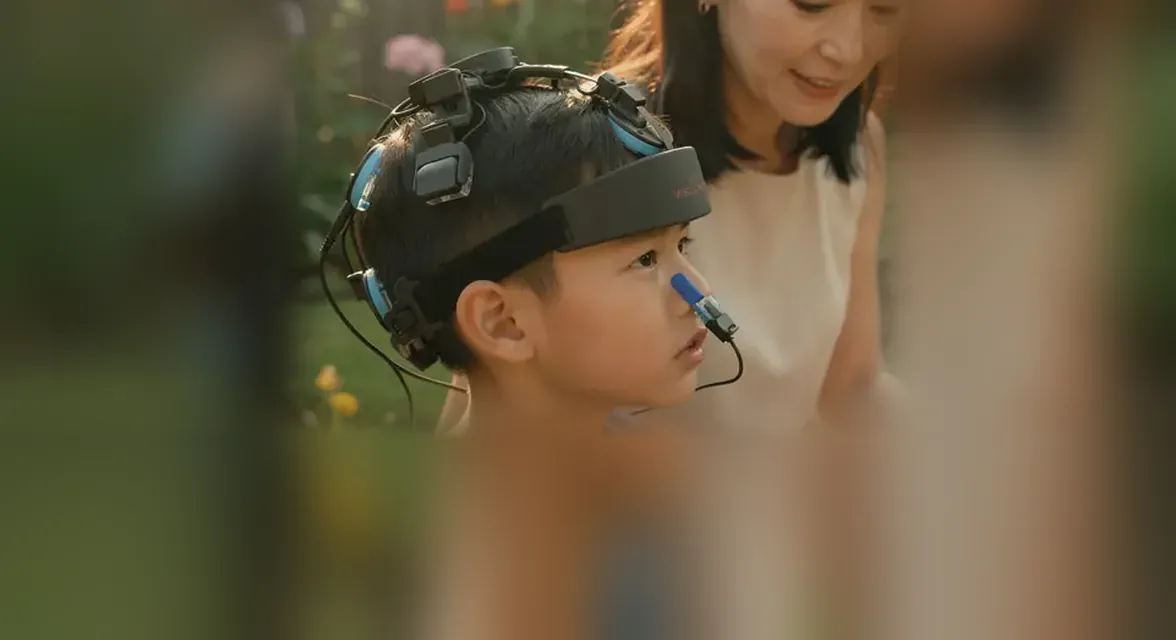
Brain red light therapy (Vielight)
Your child wears a headset that delivers red light therapy to the brain, which supports its energy and blood flow and reduces inflammation. Research shows that this can improve impulse control, attention and other thinking skills in people with ADHD, with gains lasting weeks after treatment 10, 11.
More about brain red light therapy →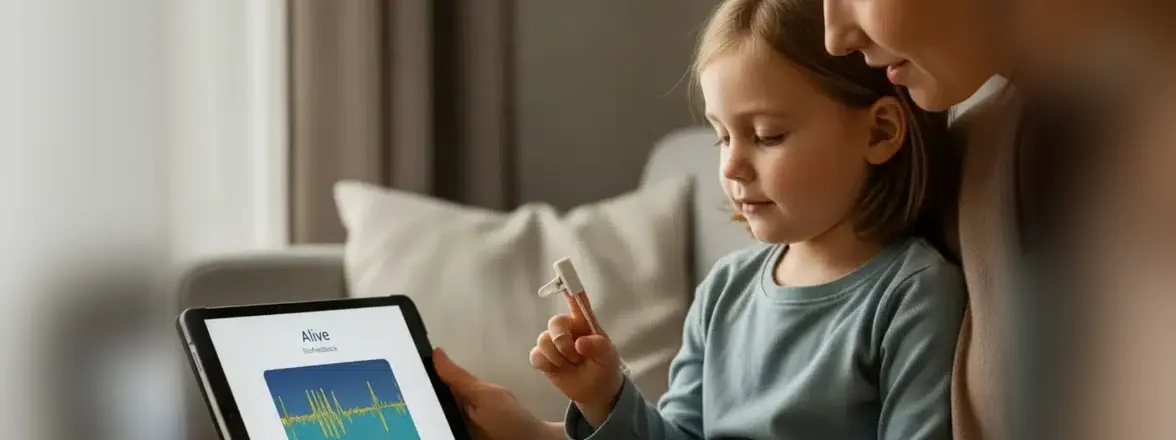
HRV biofeedback
While completing brain red light therapy, your child practices slow, paced breathing. Sensors detect their heart rate and reward them for relaxing and pressing the "brake pedal" of the nervous system. In one study, this improved memory and reduced behavioural problems reported by teachers 12.
More about HRV biofeedback →What a session looks like
One hour, once or twice a week. Parents stay in the room, and there's nothing to prepare.
- 1Check in
We start with how the week went, reviewing any changes in behaviour, attention, stress, and mood.
- 2Neurofeedback
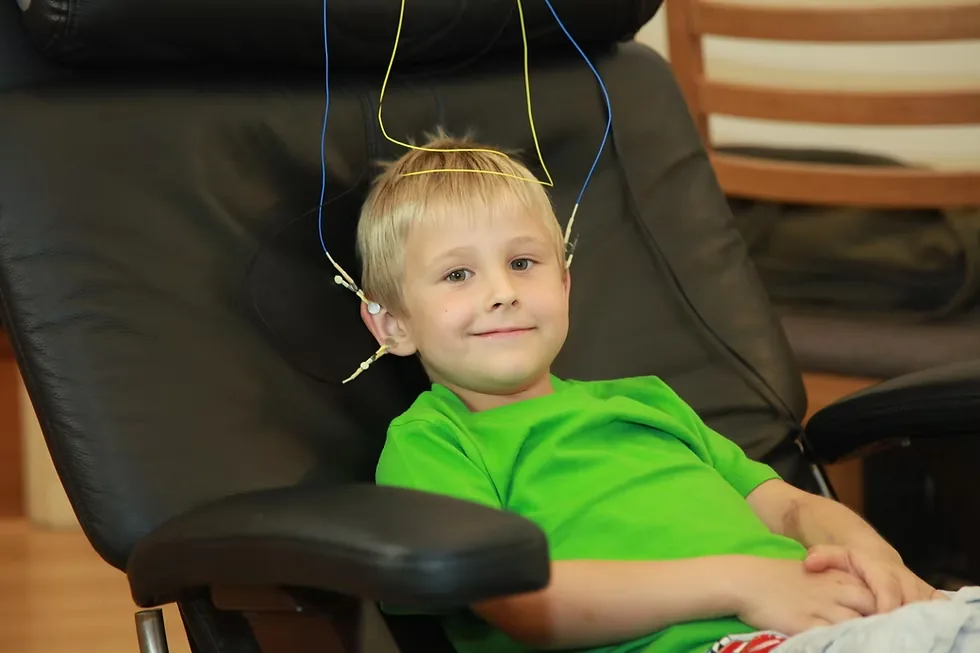
We attach small EEG neurofeedback sensors. Then your child watches an engaging video, receiving feedback about their brain activity.
- 3Red light + HRV biofeedback
Your child wears the red light headset while practicing slow breathing. Every session is adjusted to your child, so on a 'wiggly' day we can easily pivot.
What we hear from parents
- Better focus and follow-through on tasks
- Less fighting and pushback, morning and night
- Sleeping better through the night
- More mature with friends, family, and at school
- Out the door in the morning without a meltdown
- The whole driveway shovelled, not just half
Who you'll be working with
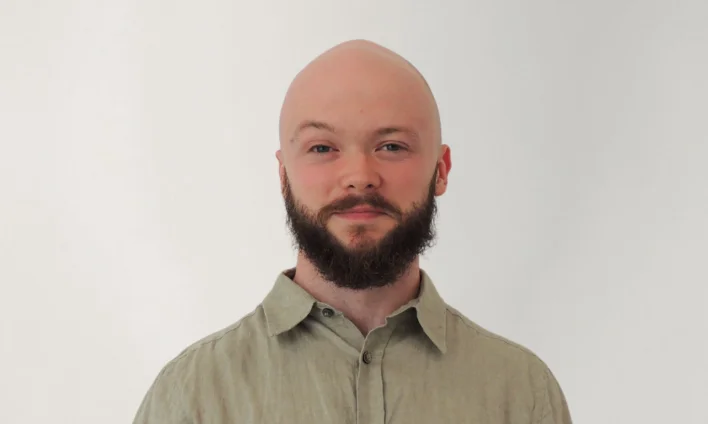 Nigel Barnim
Registered Psychotherapist (Qualifying)
Hi, I'm Nigel Barnim, owner of Hamilton Neurofeedback & Psychotherapy. I've given neurofeedback to dozens of children with ADHD, spent years doing paper-and-pencil ADHD diagnostic assessments, and have delivered more than 1,000 neurofeedback sessions over my 5+ year career. I also offer ADHD therapy and counselling for teens and adults through our separate psychotherapy service.
More about Nigel →



You may still have questions about ADHD treatment
Will it work for my child?
Many clients notice changes within 3–5 sessions, and some notice results right away. However, just like with medication or therapy, not everyone responds equally. Around 10% of clients notice no change after 10 sessions. If that happens, we go above-and-beyond to help you find other options.
How much does it cost? Is it covered by benefits?
One-hour sessions are $100 with no additional HST. Most extended health benefits plans cover sessions under Psychotherapy benefits. Limited sliding-scale spots and home rentals can also help lower the cost.
Can it be combined with medication?
Yes, neurofeedback can be safely combined with medication. Some families choose neurofeedback as ADHD treatment without medication; others use it alongside medication or ADHD coaching.
Is it safe?
The tools in the Neurofeedback Program are generally safe, with fewer than 10% of new clients noticing side effects during their first few sessions. These occasionally include mild fatigue, headache or heightened emotions that pass within 24 hours. Side effects typically stop as the brain adapts to sessions.
How young can my child start?
Neurofeedback sessions are available for children as young as 4.
Do we need a diagnosis or referral?
You don't need a diagnosis or a referral to get started. In fact, many people without a formal diagnosis still use neurofeedback to support focus, calmness, and emotion regulation.
How many sessions will my child need? How long do results last?
A full course is usually around 30 sessions, though some clients are satisfied after 20 and some choose to keep doing sessions beyond 30. Compared with medication, many clients find that benefits last long after they finish their course of neurofeedback. Like learning a skill, the brain tends to keep what it's learned.
Is this counselling or therapy?
Our Neurofeedback Program is brain and nervous system training, not talk therapy. We do offer psychotherapy for teens and adults as a separate service, and the two can work well together, but you never have to do both.
Is there help for me as a parent? Do you offer ADHD treatment for adults?
Yes, adults can benefit too. Many adults don't fully outgrow ADHD: in one long-term study, about 90% of children with ADHD still had some symptoms as young adults 13.
It's common for parents to do sessions alongside their kids, or for families to rent neurofeedback systems for unlimited at-home use. We also offer psychotherapy for teens and adults, if you'd like support of your own.
Your child's brain can learn new patterns. Neurofeedback can help them get there.
Book a free 30‑minute phone call to talk about your child and see whether ADHD treatment with neurofeedback is a good fit.
No waitlist · Covered by most benefits plans · Sessions in Hamilton and Burlington
References
- Espinet SD, Graziosi G, Toplak ME, Hesson J, Minhas P. A review of Canadian diagnosed ADHD prevalence and incidence estimates published in the past decade. Brain Sciences. 2022;12(8):1051. Link
- Public Health Agency of Canada. Autism spectrum disorder: highlights from the 2019 Canadian Health Survey on Children and Youth. 2022. Link
- Ben-Shoshan M, Harrington DW, Soller L, Fragapane J, Joseph L, St Pierre Y, Godefroy SB, Elliott SJ, Clarke AE. A population-based study on peanut, tree nut, fish, shellfish, and sesame allergy prevalence in Canada. Journal of Allergy and Clinical Immunology. 2010;125(6):1327–1335. Link
- Prasad AN, Sang X, Corbett BA, Burneo JG. Prevalence of childhood epilepsy in Canada. Canadian Journal of Neurological Sciences. 2011;38(5):719–722. Link
- Public Health Agency of Canada. Diabetes in Canada: facts and figures from a public health perspective. Chapter 5: Diabetes in children and youth. Link
- Theule J, Wiener J, Tannock R, Jenkins JM. Parenting stress in families of children with ADHD: a meta-analysis. Journal of Emotional and Behavioral Disorders. 2013;21(1):3–17. Link
- Leitch S, et al. Experience of stress in parents of children with ADHD: a qualitative study. International Journal of Qualitative Studies on Health and Well-being. 2019;14(1):1690091. Link
- Sung V, Hiscock H, Sciberras E, Efron D. Sleep problems in children with attention-deficit/hyperactivity disorder: prevalence and the effect on the child and family. Archives of Pediatrics & Adolescent Medicine. 2008;162(4):336–342. Link
- Zhong X, et al. Neurofeedback training for executive function in ADHD children: a systematic review and meta-analysis. Scientific Reports. 2025. Link
- Salehpour F, Barrett DW, Mirji A, Farzamnia A, Burugu V, Shah N, Gonzalez-Lima F. Transcranial photobiomodulation improves prefrontal oxygenation and impulse control in adults with ADHD: a randomized controlled trial. BMC Psychiatry. 2026;26:767. Link
- Lai Q-J, Chen Y, Liu L, Li H-M, Pan M-R, Wang Y-F, Niu H-J, Qian Q-J. Repetitive transcranial photobiomodulation improves working memory and attention in adults with ADHD: a 4-week follow-up study. Photobiomodulation, Photomedicine, and Laser Surgery. 2025;43(5):190–197. Link
- Lloyd A, Brett D, Wesnes K. Coherence training in children with ADHD: cognitive functions and behavioral changes. Alternative Therapies in Health and Medicine. 2010;16(4):34–42. Link
- Sibley MH, et al. Variable patterns of remission from ADHD in the Multimodal Treatment Study of ADHD. American Journal of Psychiatry. 2022;179(2):142–151. Link